Stay put, or keep moving?
In Night of the Living Dead (1968), George Romero’s horror classic, the driving tension between Ben and Harry is whether to fortify the ground floor of the farmhouse, or head to the cellar? And so the world was introduced to what would become a staple trope of the zombie sub-genre: stay put, or keep moving?
What was particularly ingenious about Romero’s idea was that his films (and the many that have followed his lead) refuse the vindicate either side of the debate. Yes the horde outside is dangerous, but so are the people on the inside!1
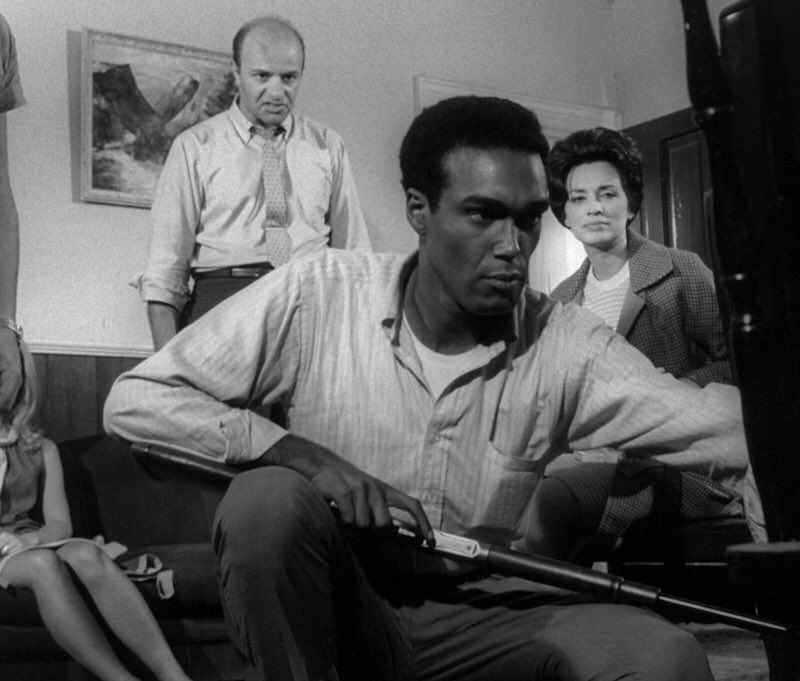
Inside the zombie sub-genre risk is symmetric. There is no gradient with which the characters can lean towards for a more consistent upside. If there were, the movies would be less fun. But some environments do display such a gradient, where a consistent approach does yield a more consistent, if not inevitable, positive outcome.
Medicine, appears to me, to be one domain in which the gradient means we lean towards restraint. Humans are (by and large) self-healing systems and so doing nothing isn’t passivity, it’s the delegation of effort to a system that’s already on your side: homeostasis, tissue healing, and immune response are all examples of this. Intervention, by contrast, introduces new risk. We see this represented in “primum non nocere” (first, do no harm) the maxim taught to medical students the world over. We see it in the field of quaternary prevention, which aims to avoid unncessary medical intervention and the iatrogenetic harm that follows. And I have seen it first hand in the world of healthcare screening, a formalised interventionist stance, where the subject of overscreening and overdiagnosis is rightly debated.
In digital the gradient leans the other way…
I like to think of digital products and services as socio-technical systems because that description recognises the centrality of the humans interacting with them. And not just the humans that use the service, there are humans upgrading other bits of code, the threat actors trying to gain access, and the competitor trying to seize your audience by out-innovating you.
Code might remain static, but the surrounding human activity makes a digital service quite the opposite. Becasue the environment code sits in never holds still. So doing nothing, to “freeze code”, is not to hold a live service steady. It is to let it drift backwards, to allow vulnerabilities to accumulate, bugs to emerge and competive gaps to widen. We are back in the farmhouse, but this time the gradient points towards movement.
If there is a generalised observation to be made here it is that awareness of the environent you operate within is critical to understanding how to respond to uncertainty and risk. Intervene too much in a self-healing environment and you risk causing unncessary harm, under-intervene in a moving, adversarial environment, and risk decay and breach.
When building digital services in the NHS these two gradients collide. There are people whose training rightly teaches them caution and people (myself included) who have been rightly taught that to keep moving is safer. We are observants of Manny Lehman’s Law, know that the ecosystem is moving, the importance of maintainence, and to keep our head up, and our feet moving.
Rectifying this tension feels like a job for everyone involved. Digital folks need to show that we have moved beyond “move fast and break things” to an era when speed and stability are not trade-offs. We also need to show that doing things safely is part of our culture too, and with it comes a huge respect for our counterparts in assurance.
But this also means an assurance culture that champions change just as we do. Not for the sake of it, but because that is how we make digital services safer.
We are all in the farmhouse together, and the gradient is telling us to keep moving.
1. Despite being a huge fan of zombie movies their typical outlook on human behaviour doesn't really gel. When faced with disaster humans are, for the most part, a caring and compassionate bunch.↵